

Birds use their feathers to fly. But not all birds fly the same way. Some birds fly long distances, some fly very fast but only for short distances. Birds have adapted their wings to different ways of taking off and flying
Fast Take‐off Wings

Some birds like turkeys, pheasants, etc., must take off quickly to get away from predators. These birds have relatively short, fat wings. This wing shape allows fast take off and short flight. These birds are good at flying around trees and other obstacles.
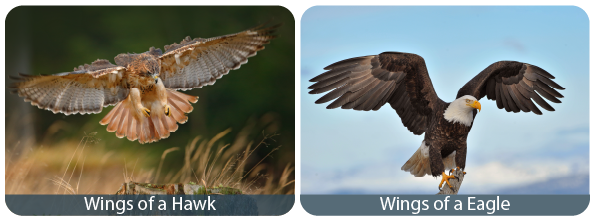
Soaring Wings
We see Red‐tailed hawks, eagles, vultures, etc., are soaring above the earth. Their wings are long but are relatively broad or fat. This wing shape is great for soaring high up in the sky. Vultures can fly high in the air for hours without flapping their wings.

High‐Speed and Manoeuvrability Wings
These wings are long, narrow, and angled. So birds with, this wing type can fly quickly. Fast movements, which allows the bird to turn quickly. We see such wings in swifts, swallows and other shorebirds.
We can see the Barn Swallow catching insects in the air!

Slow, Flapping Wings
The Heron and egret have wings which are long and slender. This wing shape is good for long flights. Long, slow wing flaps characterize the flight of these birds that fly long distances.

Long‐Distance Flyer Wings
Many long‐distance migrating birds stay in the air for two days! Their wings make this possible. The wings are long, narrow and pointed. They make flying easy and reduce the amount of energy the bird needs to fly long distances. Seagulls have this kind of wings.

Flightless birds
Some birds cannot fly. The Ostrich, penguin and kiwi cannot fly. The Ostrich is a very fast runner and it can actually beat a horse. Penguins are good swimmers. They sometimes wobble when they walk, but they are very good at diving and swimming.